If you work in HR, learning and development, or corporate compliance, you already know the struggle. You spend weeks putting together a thorough, well-researched training manual and save it as a PDF. You distribute it to the team only to find out that people are just skimming it, or worse, not reading it at all. It’s a common problem because reading long documents feels like a chore.
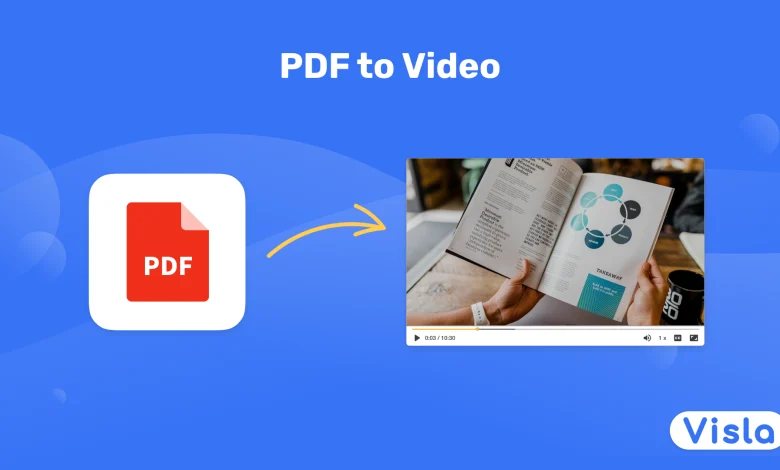
The traditional fix is to film a training video. But that means writing scripts, finding a speaker, recording footage, and dealing with editing software. It’s expensive and slow. Now, there’s a much better way to handle this. You can use a tool to convert pdf to video, automating almost the entire process. By dropping your document into an AI generator, you instantly get a structured, narrated video. Let’s look at how automating this workflow can completely change the way you train your team.
The Problem with Traditional Training Manuals
Let’s be honest, people learn differently today. When given a choice between scrolling through a 40-page text document or watching a 5-minute explainer video, almost everyone chooses the video. Humans are visual learners. We retain information much better when we hear it spoken while looking at matching visuals.
The issue isn’t that the information in your PDF is bad; it’s the delivery format. Text-heavy documents require a lot of focus, which is hard to maintain during a busy workday. Converting that text into a video breaks the information down into bite-sized scenes. It sets a comfortable pace for the learner. Plus, videos are much easier to track—you can actually see who watched the video and who didn’t, which is nearly impossible to do with a PDF email attachment.
How Automation Replaces the Video Studio
So, how does automating the video creation process actually work? It might sound like a magic trick, but it’s really just smart software doing the heavy lifting. Using a platform like Leadde AI, you essentially replace the camera and the video editor with code.
When you upload your training PDF, the system’s text-parsing layer takes over. It doesn’t just scan the document; it understands it. It looks for headings to divide the content into scenes and pulls out bullet points to create visual lists on the screen. Then, it uses a language model to rewrite your paragraphs into a spoken script. It actually knows how to summarize verbose text into something that sounds natural when spoken out loud.
Once the script is ready, the AI maps it to a digital avatar. You don’t have to hire a voice actor; the Expressive IV engine generates a voice that sounds surprisingly human. It perfectly matches the lip movements of the digital avatar to the words being spoken. The end result is a polished video that looks like it took days to put together.
Dealing with Fast-Changing Procedures
One of the biggest headaches in corporate training is keeping the material up to date. The moment you finish editing a traditional video, a company policy changes, and now the video is obsolete. You can’t easily “patch” a video. You usually have to reshoot the segment.
This is where automated video creation is a massive advantage. Because your video is tied to the text script, updating it takes thirty seconds. You just open the editor, change the sentence that describes the new policy, and click generate. The AI instantly updates the voiceover and re-syncs the avatar. This version control makes managing a large library of training videos incredibly simple.
Scaling Through Multilingual Support
If your company operates in multiple countries, your training challenges are multiplied. Not only do you have to create the video, but you also have to pay for translation and localized voiceovers.
Automating text to video solves this perfectly. You can generate your initial video in English, and then, with a single click, tell the system to translate the entire thing into Spanish, French, or Japanese. The AI translates the on-screen text, generates a new voiceover in the target language, and recalculates the avatar’s facial expressions so the mouth movements match perfectly. Leadde supports 89 different languages, making it incredibly easy to ensure your global workforce is getting the exact same training content.
Best Practices for AI Training Videos
If you want to get the best results from your automated videos, here are a few practical tips:
- Structure Your Source Document: The AI does its best work when it can clearly identify sections. Use H1 and H2 tags in your original document, and rely heavily on bullet points.
- Keep It Short: Just because the AI can read a 50-page document doesn’t mean you should make a two-hour video. Break long manuals into smaller, topic-specific videos.
- Choose the Right Tone: If it’s a serious compliance document, select an “objective” or “structured” tone for the AI voice so the delivery matches the material.
Streamlining Your Training Processes
You no longer have to choose between writing boring documents or spending your entire budget on video production. By automating the conversion from text to video, you can deliver engaging, localized, and easily updatable training content in a fraction of the time. It allows your learning and development team to focus on the actual curriculum, while the software handles the tedious job of turning those lessons into something people actually enjoy watching.